Organised Rackets Running Paid Infiltration Networks Active in Meghalaya
The syndicates are driven purely by profit, with no concern for national security

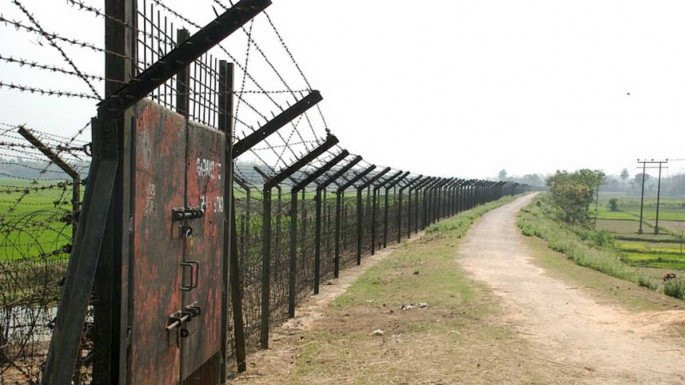
As the country marks Republic Day, security agencies have once again sounded a nationwide alert against possible terror threats. Security has been tightened across all states. However, this year even small states like Meghalaya are on the radar. The key reason is the rapid rise of radical and Pakistan-backed extremist groups operating out of Bangladesh, whose focus is increasingly shifting towards India’s northeastern region.
While the terror alert remains a top concern, authorities across the country are also intensifying action against illegal Bangladeshi nationals. This has raised a critical question: how are these infiltrators entering India despite the strong presence of the Border Security Force (BSF)?
India’s border with Bangladesh stretches from West Bengal to several northeastern states. Historically, the main infiltration route has been through West Bengal, where large-scale illegal crossings have taken place over the years. However, infiltration through the northeastern corridor, including Meghalaya, is also significant and cannot be ignored.
A recent case in Meghalaya has exposed how these networks operate. On January 20, police action in Jowai forced 18 Bangladeshi nationals out of their hiding places, revealing a local support network active along the Dawki route. This has raised serious questions about how long these foreign nationals had been living undetected in and around Jowai.
The operation began around 3 a.m. when a team of the West Jaintia Hills Police, along with the village headman of Demthring and the Village Defence Party (VDP), intercepted a vehicle speeding towards Amlarem. The vehicle (ML-04D 7339), driven by Vishal Dakhar of Dawki, was stopped near Sanmala Guest House. Four Bangladeshi nationals were found inside.
According to police sources, this was not a fresh infiltration. The individuals had earlier entered through the Dawki sector and had been living in Jowai and nearby areas for some time. With police scrutiny increasing, there was reportedly a plan to send them back towards the border under the cover of darkness.
During the operation, two Indian middlemen — Meban Dakhar and his associate Melari Rasmud — were detained from Lad Demthring with another vehicle (ML-04D 4739). During interrogation, Meban Dakhar revealed that three more vehicles carrying Bangladeshi nationals had already left Jowai for Dawki.
Based on this information, police set up checkpoints in the Amlarem market area. Around 3:45 a.m., three vehicles were intercepted — ML-05AD 6424 (driven by Blessing Pamtheid of Jarain village), ML-04D 4993 (driven by Twel Rongangi of Shkentilang village), and ML-04E 0640 (driven by Rimi Lyngdoh of Shkentilang village). A total of 14 Bangladeshi nationals were found in these vehicles.
In all, 18 Bangladeshi nationals, two Indian brokers, and five drivers have been arrested. Five vehicles were seized. Police are investigating whether the drivers were part of an organised syndicate or were simply hired for local transport.
To understand the larger network, our team spoke to sources in border villages. On condition of anonymity, they revealed that several organised gangs operate across the border, charging large sums to facilitate illegal entry into India. These networks stretch from Bangladesh into various parts of the country.
According to the sources, Bangladeshi nationals first contact handlers across the border who take “bookings” for crossing. A time and route are fixed. Members on the Indian side — well-informed about secret paths and BSF movements — then carry out the crossing. From there, other agents arrange transport to different Indian states. The money earned is distributed across the entire network.
This is not a small operation. The income runs into crores of rupees. The syndicates are driven purely by profit, with no concern for national security. The same networks are often linked to cattle smuggling, grain smuggling, and even human trafficking.
The easiest routes are in areas where border fencing is incomplete. However, vigilance has now increased in border villages. Local-level monitoring and police coordination have intensified, making operations more difficult for these gangs.